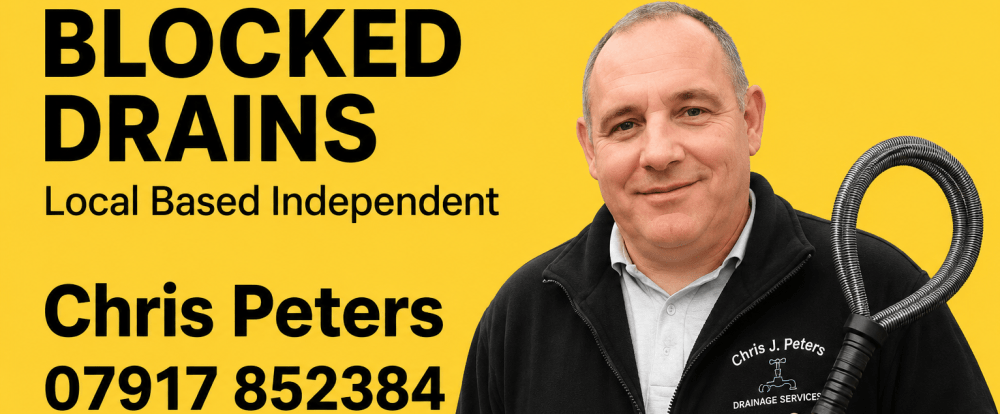
Blocked drains, toilets and sinks cleared across Kent
I’m Chris Peters, an independent drainage engineer based near New Romney in Kent. I provide practical help with blocked drains, blocked toilets, blocked sinks, overflowing gullies and slow-running waste pipes.
With more than 35 years of hands-on plumbing and drainage experience, I can identify whether the problem is a local blockage, a restriction further along the pipe or a possible fault in the main drainage system.
Independent engineer
Fixed prices where possible
No VAT
No national call centre
A drainage problem can quickly become unpleasant, especially when sewage is rising, the only toilet in the property will not clear or water is backing up through an outside gully. My aim is to establish the likely cause, choose a sensible method of clearance and restore a reliable flow without carrying out unnecessary work.
You speak directly to me when you call—not a salesperson or a national call centre. Tell me what is happening, which fittings are affected and your location or postcode. Photographs sent by WhatsApp can also help me understand the problem before travelling.
Drain unblocking services
Blocked drain clearance
Help with underground drain and sewer blockages, high water in inspection chambers, overflowing gullies, unpleasant smells and wastewater backing up around the property.
Blocked toilet unblocking
Clearance of toilets obstructed by excess paper, wet wipes, toilet fresheners or other objects, including problems caused by a restriction in the pipe beyond the toilet.
Blocked sink and waste pipes
Kitchen and bathroom sink blockages commonly caused by grease, food deposits, soap, hair or scale collecting inside traps and waste pipes.
Outside drains and gullies
Clearance of outside gullies and surface-water drains affected by leaves, silt, moss, grease, waste deposits or a restriction further downstream.
Drain cleaning
Cleaning may be helpful when deposits remain inside a pipe after the main blockage has been removed or when grease, scale and debris repeatedly reduce the flow.
CCTV drain inspections
A drain camera can help investigate recurring blockages, displaced joints, damaged pipes, root entry and unexplained drainage problems when an inspection is genuinely useful.
Signs that you may have a blocked drain
Some blockages develop gradually while others appear suddenly. Early warning signs can include:
- A sink, bath or shower emptying more slowly than usual
- A toilet that rises unusually high or drains away slowly after flushing
- Gurgling sounds from a toilet, plughole or waste pipe
- Unpleasant sewage or stagnant-water smells
- Water appearing in an outside gully when an indoor fitting is used
- A manhole remaining unusually full when no water is being discharged
- Wastewater or sewage backing up into the property
- A blockage returning shortly after it was previously cleared
Blocked toilets
A toilet can become blocked in its own trap, in the short branch pipe serving it or further along the main drain. Common causes include excessive toilet paper, wet wipes, sanitary products, clip-on toilet fresheners and other objects that should not enter the drainage system.
If the toilet is the only fitting affected, the problem may be close to the pan. If the toilet water rises when a sink, bath or washing machine empties, or several fittings are affected together, the obstruction is more likely to be downstream.
A plunger may help with a simple local obstruction, but repeated flushing can cause an overflow. Never continue flushing a toilet if the water level is already high.
Blocked kitchen and bathroom sinks
Kitchen sink waste pipes commonly become restricted by cooking fat, oil, food particles and detergent deposits. The mixture can cool and harden against the inside of the pipe until water can no longer escape properly.
Bathroom basins, baths and showers are more commonly affected by hair, soap residue, toothpaste and limescale. The restriction may be in the trap immediately below the fitting or inside the waste pipe.
If more than one fitting is slow, clearing only a sink trap may not address the real problem. The shared waste pipe or main drain should also be considered.
Blocked outside drains and overflowing gullies
An outside drain or gully can collect leaves, soil, silt, grease and other debris. However, water standing in a gully does not always mean the obstruction is inside the gully itself. The connecting pipe or main drain may be blocked further downstream.
If an outside chamber fills whenever a toilet is flushed or an appliance empties, reduce water use until the drainage route has been checked. This can help prevent wastewater escaping around doors, patios and low areas of the property.
Chris’s professional advice
The pattern of the symptoms often tells me more than simply being told that “the drain is blocked.” Before calling, check whether one fitting or several are affected, whether an outside chamber is full and whether the problem began suddenly or has gradually become worse.
For recurring blockages, the objective should be to understand why the problem returns—not merely to make a temporary hole through the obstruction. Once the pipe is clear enough to inspect, a CCTV drain inspection may reveal roots, damage, a displaced joint or deposits that have not been fully removed.
What commonly causes drainage blockages?
Wet wipes and unsuitable items
Even products described as flushable can remain intact long enough to collect on joints, roots and existing deposits. Wipes, sanitary products and cleaning cloths should not be flushed.
Fat, oil and food deposits
Cooking grease sticks to the pipe wall and traps food particles. Over time, the internal diameter becomes smaller until the sink or drain stops flowing.
Hair, soap and scale
Hair binds with soap residue and limescale inside bathroom traps and waste pipes, producing a restriction that often worsens gradually.
Roots and damaged pipes
Roots normally enter through an existing defect, open joint or crack. Displaced joints, broken clay pipes and poor alterations can also collect waste and cause repeated trouble.
How I approach professional drain clearance
- Understand the symptoms. I ask which fittings are affected, when the problem began and whether any chamber or gully is overflowing.
- Find suitable access. The safest and most effective access point depends on whether the obstruction is in a fitting, waste pipe, chamber or underground drain.
- Choose the appropriate equipment. The method may involve professional plunging, mechanical cleaning, rods or other drain-clearance equipment depending on the pipe and obstruction.
- Restore and test the flow. After clearance, water should discharge properly without rising elsewhere in the system.
- Advise if further investigation is sensible. Recurring problems, recovered roots or signs of pipe damage may justify a CCTV inspection.
Does every blocked drain require a CCTV survey?
No. Many one-off blockages caused by paper, grease or a local accumulation can be cleared without a camera inspection. Adding a survey to every straightforward blockage would create unnecessary work and expense.
A CCTV drain inspection becomes more useful when:
- The same drain has blocked repeatedly
- Roots, stones or pieces of pipe are recovered
- The water level returns after clearance
- There are signs of a displaced joint, crack or collapse
- Recent building work may have altered or damaged the drainage
- The pipe route or cause remains uncertain
Why choose an independent drainage engineer?
- You speak directly to Chris, the engineer carrying out the work
- More than 35 years of practical plumbing and drainage experience
- City & Guilds qualified and CITB trained
- Fixed prices agreed where the job can be assessed beforehand
- No VAT added to the quoted price
- No salesperson, national call centre or unknown subcontractor
- Practical advice based on the condition of your drainage system
I work independently and bring the equipment and practical experience needed for many common domestic drainage problems. If further investigation or repair is genuinely advisable, I will explain why instead of automatically adding work that may not be necessary.
Blocked drain help across Kent
I’m based near New Romney and provide drain-unblocking services across many parts of Kent, subject to availability. Areas nearer my base are normally the most practical for a quick response, although I also travel further across the county.
I also cover Greatstone, Littlestone, Dymchurch, Hythe, Sandgate, Lydd, Rye, Tenterden, Canterbury, Dover, Deal, Tonbridge, Tunbridge Wells and surrounding Kent towns and villages, depending on distance and availability.
If you are unsure whether I cover your address, call or send your postcode by WhatsApp. You will speak directly to me.
Frequently asked questions
What should I do if sewage is coming up through a drain?
Stop using toilets, taps, washing machines and dishwashers wherever possible. Continued water use can make the overflow worse. Keep people and pets away from contaminated water and call for professional help.
Why does my toilet gurgle when I empty a sink or bath?
A gurgling toilet can indicate that air and wastewater are struggling to pass a restriction in a shared branch or main drain. If several fittings are affected, the blockage may be further downstream.
Can heavy rain cause an outside drain to overflow?
Heavy rain can expose a restriction in a surface-water drain or overwhelm a system that is already partly blocked by silt, leaves, roots or debris.
Will boiling water clear a blocked kitchen sink?
Hot water may soften a small amount of grease, but boiling water can damage some plastic pipes and seals. It will not reliably remove a substantial restriction further along the pipe.
Why has my drain blocked again after being rodded?
Rods may restore a temporary flow without fully removing deposits. Recurring trouble can also be caused by roots, a displaced joint, damaged pipework or an obstruction that was not completely removed.
Can you clear toilets and sinks as well as outside drains?
Yes. I work on blocked toilets, kitchen and bathroom sinks, baths, showers, waste pipes, outside gullies and underground drains.
Do you provide fixed-price drain clearance?
Where I can understand the likely job beforehand, I provide a fixed price so you know the charge before work begins. More complicated investigation work may need to be assessed separately.
Does finding roots mean that the drain must be excavated?
Not necessarily. Roots normally indicate an entry point such as an open joint or crack. CCTV evidence can help establish whether cleaning, local repair, lining or excavation is suitable.
Should I use chemical drain cleaner?
Avoid mixing products or adding chemicals to a fully blocked drain. Strong cleaners can cause burns, damage some materials and leave hazardous liquid above the obstruction. Tell me if chemicals have already been used.
Can I send a photograph before booking?
Yes. A photograph of the affected fitting, gully or chamber—together with your postcode and a description of the symptoms—can help me understand the likely problem.
Need a blocked drain, toilet or sink cleared?
Call Chris Peters Plumbing & Drainage for straightforward advice from an independent Kent drainage engineer with more than 35 years of experience.
Please include your postcode and tell me whether the problem affects a toilet, sink, outside drain or several fittings.
