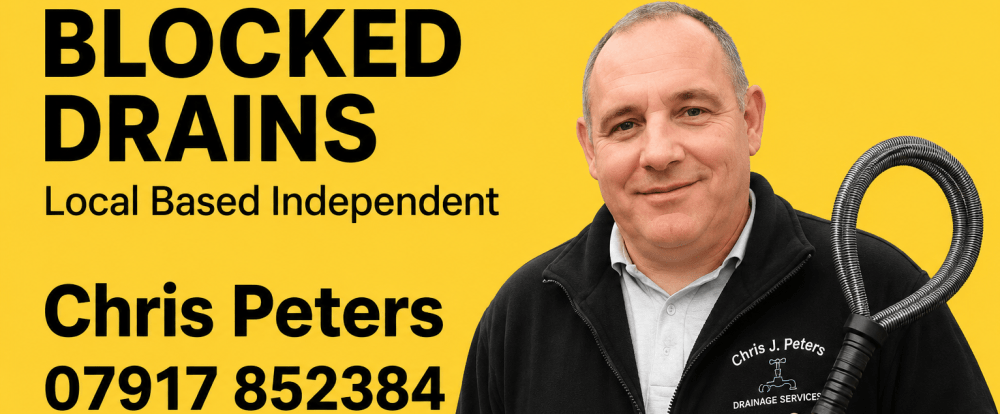
Professional drain clearance in Ashford
Drain slow, completely blocked or repeatedly backing up? I’m Chris Peters, an independent drainage engineer providing professional drain-clearance services across Ashford TN23, TN24 and surrounding areas.
Emergency blocked drain? Call Chris now
Same-day drain unblocking where available. Fixed-price drainage help for blocked toilets, sinks, gullies and outside drains. Local independent drainage engineer — no call centre.

With more than 35 years of plumbing and drainage experience, I assess the symptoms, identify suitable access and use an appropriate clearance method for the pipe and type of obstruction.
Independent engineer
Fixed prices where possible
No VAT
Direct contact with Chris
A drainage system can become restricted gradually by grease, scale, silt and other deposits, or it can stop suddenly when wipes, paper, roots or an object create an obstruction. The appropriate clearance method depends on what is blocked, where the restriction is positioned and the condition of the pipe.
When you call, tell me which fittings are affected, whether an outside chamber is full and whether the drain has blocked before. Photographs sent by WhatsApp can also provide useful information before the visit.
Drain unblocking and drain cleaning are not always the same
Removing the immediate blockage
The first priority is to restore the flow and prevent wastewater overflowing. A local obstruction may be removed without needing to clean an entire drainage run.
Cleaning deposits from the pipe
If grease, scale, silt or soft material remains attached to the pipe wall, more thorough cleaning may help restore capacity and reduce the chance of an early repeat blockage.
Not every drain requires extensive cleaning. A one-off obstruction caused by an unsuitable item may only need local removal. Conversely, making a narrow opening through a thick grease deposit can provide only temporary relief.
Drainage problems I clear
Blocked foul drains
Underground drainage restricted by paper, wet wipes, waste deposits, roots or foreign objects.
Slow-running drains
Partial restrictions that allow some water through but cause slow discharge, gurgling or unusually high chamber levels.
Overflowing gullies
Outside gullies affected by grease, leaves, silt or an obstruction in the connecting drain.
Blocked toilets and branches
Toilet obstructions in the pan, short branch connection or underground drain serving the fitting.
Kitchen waste deposits
Grease and food material collecting inside waste pipes, gullies and underground drainage.
Recurring blockages
Problems requiring closer attention because the flow has previously been restored but the symptoms have returned.
Warning signs that drain clearance may be needed
- Several sinks, toilets or showers draining slowly together
- A toilet gurgling when a bath, sink or appliance empties
- An inspection chamber holding an unusually high water level
- Wastewater rising through an outside gully
- Persistent sewage or stagnant-water smells
- Paper or waste visible inside a chamber
- Water levels falling temporarily and then rising again
- A previously cleared drain blocking again within a short period
When to stop using water
If sewage is rising, a chamber is overflowing or wastewater is returning through a toilet, shower or gully, stop using water wherever possible. Flushing toilets and operating washing machines or dishwashers can rapidly worsen the overflow.
What causes drains to need clearing?
Wet wipes and unsuitable flushed materials
Wet wipes do not disintegrate in the same way as ordinary toilet paper. They can catch on joints, roots, rough pipe surfaces and existing deposits. Sanitary products, cleaning cloths and other unsuitable items can create similar obstructions.
Fat, oil and grease
Cooking fat can cool and harden inside kitchen waste pipes and underground drains. Food particles and other debris stick to this layer, gradually reducing the pipe’s internal diameter.
Silt, leaves and surface-water debris
Rainwater drainage can collect soil, sand, leaves, moss and small stones. Heavier material settles in low sections and reduces the amount of water the pipe can carry during rainfall.
Roots entering defective pipes
Roots usually enter through an existing opening such as a crack, displaced joint or defective connection. Once inside, they catch waste and may create a recurring restriction.
Scale and internal deposits
Some pipes develop harder deposits on their internal surfaces. These create rough areas that collect additional material and reduce the usable opening.
Damaged or poorly installed drainage
A displaced joint, cracked clay pipe, inadequate fall or poorly constructed alteration can cause waste to settle or snag in the same position repeatedly.
Chris’s professional advice
The time between blockages is important. A drain that remains clear for several years before another ordinary accumulation is different from one that blocks again within a week.
If a blockage returns quickly, the cause may be remaining deposits, roots, a damaged joint or an unsuitable pipe arrangement. Clearing the immediate obstruction is still necessary, but further cleaning or inspection may then be sensible.
How I approach drain clearance
- Discuss the symptoms. I establish which fixtures and drainage points are affected and whether an overflow is developing.
- Identify the likely blocked section. The pattern of full and empty gullies or chambers can help locate where the flow stops.
- Choose a suitable access point. Access may be through a fitting, gully, rodding point or inspection chamber.
- Select the appropriate equipment. The method depends on the obstruction, pipe diameter, material, access and condition.
- Restore the drainage flow. The blockage is cleared so wastewater can pass through the system again.
- Test the result. Water is discharged through the affected route to confirm that it no longer rises elsewhere.
- Advise on recurring problems. If roots, damage or substantial deposits are indicated, I explain whether further cleaning or CCTV would be useful.
Drain-clearance methods explained
| Method | Commonly suited to | Important consideration |
|---|---|---|
| Professional plunging | Local toilet, sink trap and short branch obstructions | It is not suitable for every underground drain blockage. |
| Mechanical cleaning | Internal waste pipes containing hair, grease or soft deposits | Correct equipment and access are essential to avoid damage. |
| Drain rods | Accessible obstructions in suitable underground pipe runs | They should be used through the correct connection and direction. |
| High-pressure water jetting | Grease, silt, soft deposits and debris in suitable drains | Pressure and nozzle selection must suit the pipe’s condition. |
| Local manual cleaning | Gully pots, traps and accessible accumulations | The downstream pipe must still be checked if water remains high. |
| CCTV drain inspection | Recurring blockages, roots, suspected damage and uncertain pipe routes | The drain generally needs to be sufficiently clear first. |
When is water jetting appropriate?
High-pressure water jetting can help break down and remove soft deposits, grease and silt from suitable pipes. Different nozzles direct water in different patterns, so the equipment should be selected according to the material and pipe.
Jetting is not automatically required for every blockage. A local toilet obstruction or object inside a trap may need a more controlled method. Pipe condition and safe access should also be considered before applying water pressure.
Why rodding may provide only temporary clearance
Drain rods can be effective for pushing through or retrieving an accessible obstruction. However, if a rod merely makes a narrow opening through grease or soft deposits, substantial material can remain attached to the pipe wall.
Waste then begins collecting on the remaining deposit and the drain may block again. This does not mean rods are unsuitable; it means the cause and condition of the pipe determine whether further cleaning is needed.
How is the drain tested after clearance?
Seeing standing water disappear is encouraging, but it does not always confirm that the drain is properly clear. Testing can include running water through the affected fixtures, observing chamber levels and checking that water is not rising at another drainage point.
The amount of testing required depends on the system and original problem. A kitchen branch, main foul drain and surface-water pipe each behave differently.
Does every cleared drain need CCTV?
No. Many one-off blockages can be cleared and tested without a camera inspection. Automatically adding CCTV to every job would create unnecessary cost.
CCTV becomes more valuable when:
- The same drain has blocked several times
- Roots or fragments of pipe are recovered
- The water level returns after clearance
- A displaced joint, crack or collapse is suspected
- Building work may have damaged or altered the drainage
- The route or condition of the pipe remains uncertain
A camera can reveal roots, open joints, fractures, deposits and changes in pipe material. It can help determine whether continued cleaning, a local repair, lining or excavation is the most appropriate next step.
Reducing the chance of another blockage
- Do not flush wet wipes, sanitary products or cleaning cloths.
- Keep cooking fat, oil and food waste out of sinks.
- Remove leaves and loose debris from outside gratings.
- Investigate slow drainage before the pipe becomes completely blocked.
- Do not repeatedly rely on chemical cleaner for a recurring problem.
- Consider further investigation when roots or pipe fragments are found.
- Keep accessible chamber covers visible rather than permanently burying them.
Why choose Chris for drain clearance?
- More than 35 years of hands-on plumbing and drainage experience
- Independent engineer carrying out the work personally
- City & Guilds qualified and CITB trained
- Fixed prices where the likely work can be assessed beforehand
- No VAT added to the agreed charge
- Professional equipment for different types of blockage
- Straightforward advice about recurring drainage problems
- No national call centre or unknown subcontractor
Drain clearance across Ashford
I provide drain-clearance services across Ashford TN23, TN24 and nearby areas, subject to availability.
Willesborough
Kennington
South Ashford
Park Farm
Kingsnorth
Singleton
Great Chart
Repton Park
Chilmington
Call or send your postcode by WhatsApp. Tell me which fittings are affected, whether a chamber is full and whether the blockage has happened previously.
Related Ashford services
Blocked outside drains in Ashford
Blocked kitchen sinks in Ashford
CCTV drain surveys in Ashford
Kent drain-unblocking homepage
Frequently asked questions
Can you provide drain clearance in Ashford on the same day?
Same-day availability depends on my location, workload and the type of blockage. Call or send your Ashford postcode by WhatsApp so I can advise you.
What is the difference between drain clearance and drain cleaning?
Clearance removes the immediate obstruction and restores flow. Cleaning may remove additional grease, silt or deposits remaining on the pipe wall where that work is needed.
Does every blocked drain require water jetting?
No. The correct method depends on the position, material, access and condition of the pipe. Local toilet or waste-pipe obstructions may require different equipment.
How do I know whether the main drain is blocked?
Several fixtures affected together, a full inspection chamber or an outside gully rising when toilets are flushed can indicate a restriction in a shared or main drainage run.
Why has my drain blocked again?
Deposits may remain inside the pipe, or roots, damage, a displaced joint or poor pipe fall may be causing waste to collect repeatedly.
Do you always recommend a CCTV survey?
No. CCTV is normally more useful for recurring blockages, roots, suspected damage, uncertain routes or when recorded evidence is required.
Should I use chemical drain cleaner?
Avoid mixing products or adding strong chemicals to a fully blocked drain. Tell me if chemicals have already been used because hazardous liquid may remain above the obstruction.
Can I send photographs before booking?
Yes. Send photographs from a safe position with your postcode and details of which fittings or drainage points are affected.
Need professional drain clearance in Ashford?
Call Chris Peters Plumbing & Drainage for straightforward advice from an independent engineer with more than 35 years of practical experience.
Please include your postcode and tell me whether the drain is slow, completely blocked, overflowing or repeatedly causing trouble.
Chris Peters Plumbing & Drainage can take over safely.
📞 0791 7852384
🌍 https://www.drain-unblocking.co.uk
Same-day drain unblocking where available. Fixed-price drainage help for blocked toilets, sinks, gullies and outside drains. Local independent drainage engineer — no call centre.